Data-as-a-Product Manager (DPM): Preparing People Data for Predictive Analytics and AI
Introduction: The Data-as-a-Product Management Philosophy
The Data-as-a-Product Manager (DPM) role represents a fundamental shift from viewing data as a by-product of business operations to treating it as a strategic product with defined consumers, quality standards, and continuous improvement cycles. This role is essential for organisations implementing Predictive People Analytics and AI enablement initiatives, as it ensures data quality, accessibility, and fitness-for-purpose.
Data-as-a-Product thinking represents the achievement of DRL 7 maturity
The highest level of data readiness where data is fully prepared, governed, and optimised for advanced Predictive People Analytics and AI deployment. At DRL 7, organisations have systematically addressed all fundamental data quality barriers and established sustainable processes for maintaining data excellence. The journey to DRL 7 requires moving beyond treating data as an operational by-product and instead managing it as a strategic product with clear ownership, quality standards, consumption patterns, and continuous improvement cycles.
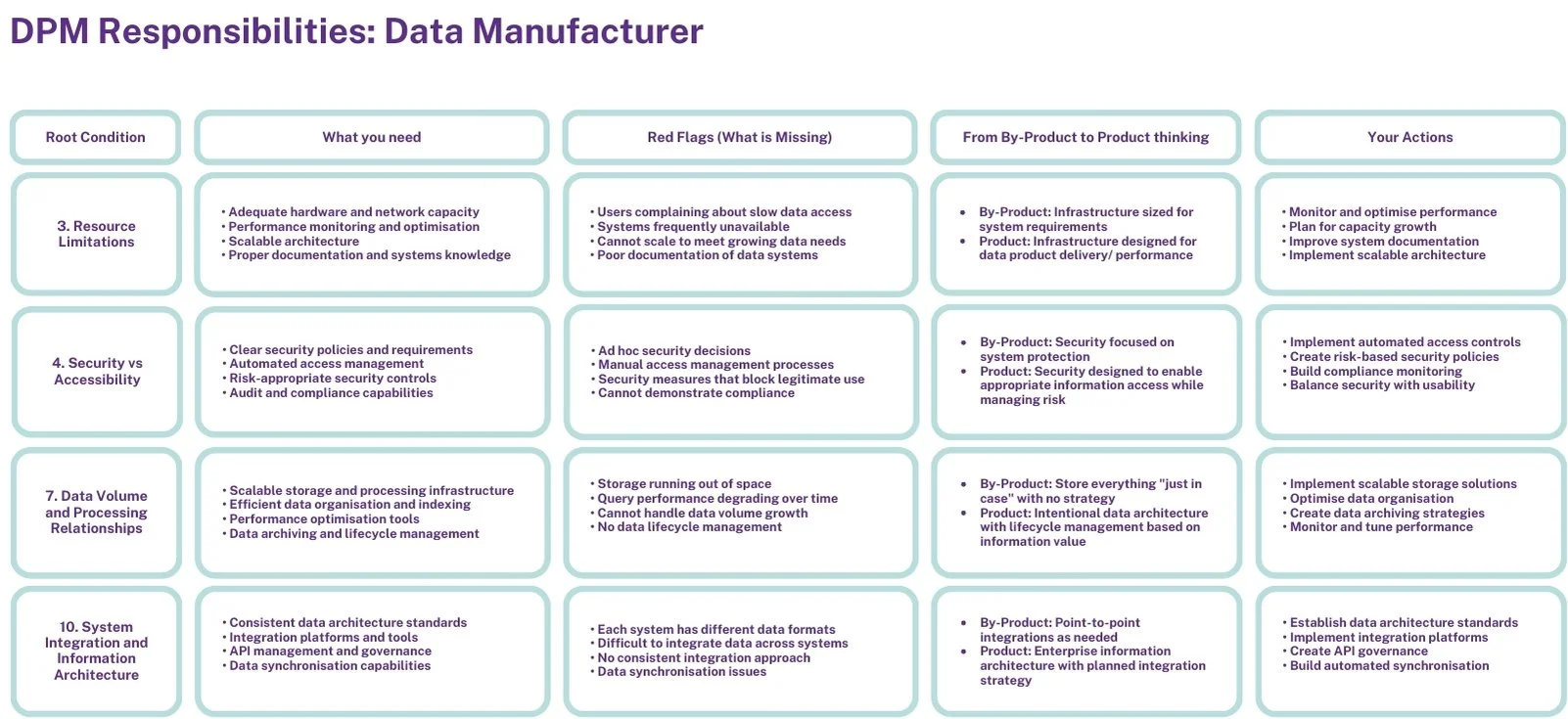
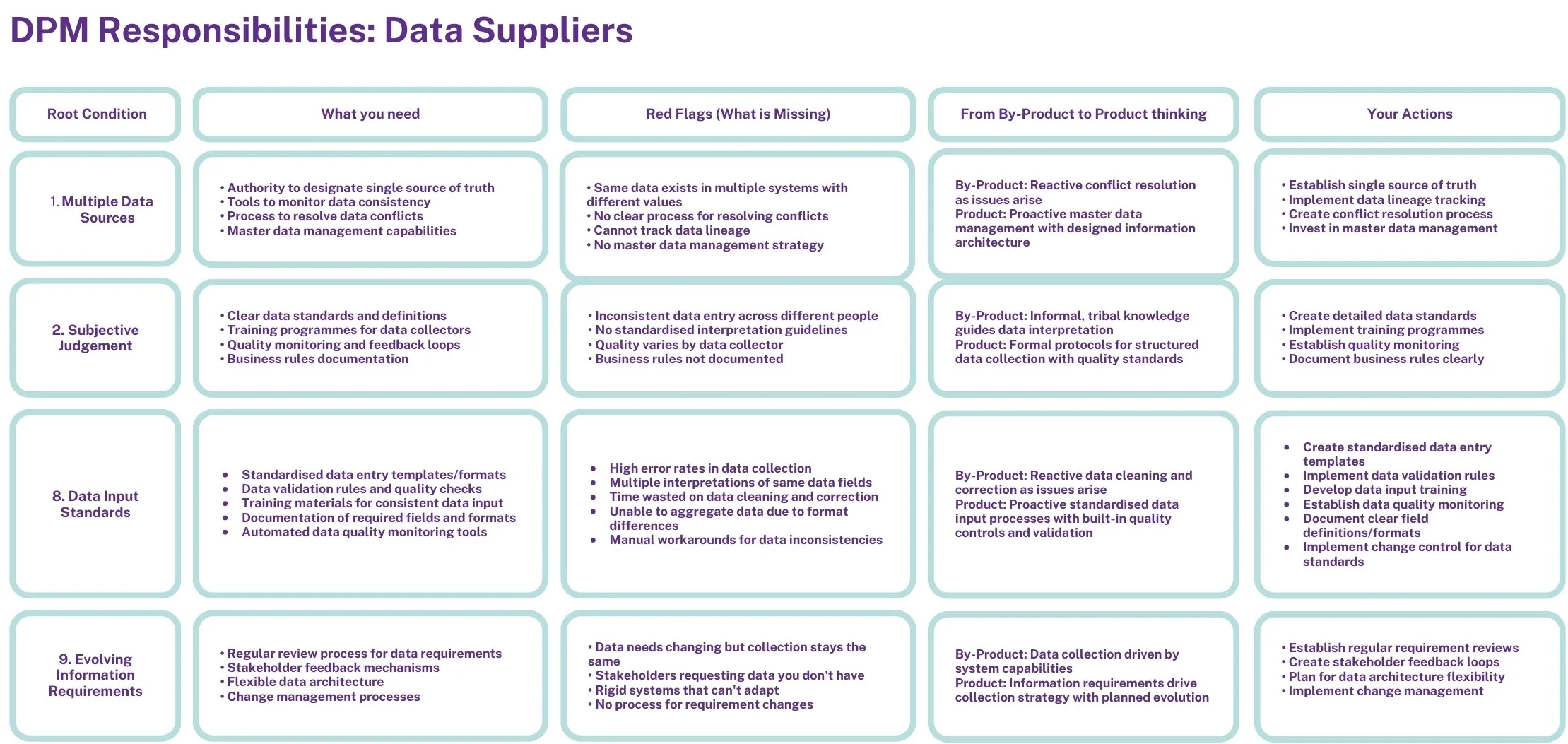
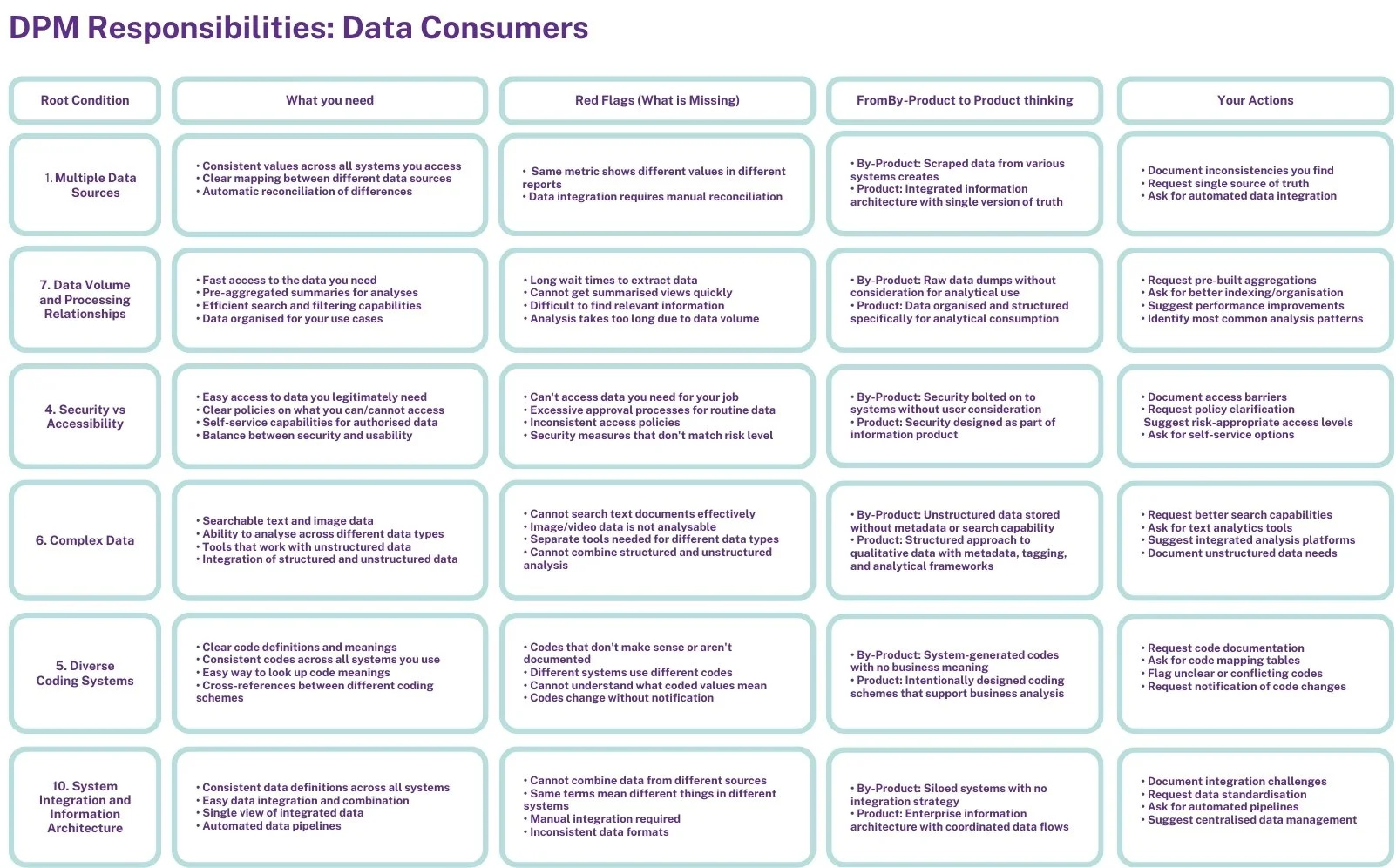
The DPM responsibilities have been carefully mapped against the 10 Root Conditions of Data Quality (Lee and Pepino, 2009), providing a comprehensive framework for addressing the fundamental challenges that prevent organisations from achieving data maturity. These root conditions—ranging from multiple conflicting data sources through to system integration challenges—represent the systemic barriers that must be overcome to progress through DRL levels toward full AI readiness.
The DPM Responsibility Frameworks serve as structural toolkits that enable the DPM to systematically address data quality issues across all stakeholder groups. Rather than tackling data challenges in an ad hoc manner, these frameworks provide:
Structured diagnostic tools for assessing current data maturity across Consumer, Manufacturer, and Supplier perspectives
Clear progression pathways showing how to advance from by-product thinking (lower DRL levels) to product thinking (DRL 7)
Actionable guidance for each stakeholder group on their role in achieving data maturity
Systematic approach to addressing root conditions that prevent DRL progression
Common language enabling cross-functional alignment and accountability
The DPM operates across three critical dimensions, each with distinct responsibility frameworks that function as systematic toolkits:
Data Consumers: Those who use data for analytics and decision-making (analytics teams, data scientists, business leaders)
Data Manufacturers: Those who build and maintain the technical infrastructure (IT teams, data engineers, platform architects)
Data Suppliers: Those who create and input data into systems (HR teams, managers, employees, administrators)
Each responsibility framework provides a structured approach to understanding what each stakeholder group needs, identifying red flags when data operates as a by-product (lower DRL levels), and outlining the thinking shift required to transform data into a strategic product (DRL 7 maturity). These frameworks don't just describe problems—they provide actionable pathways for each stakeholder group to contribute to systematic data maturity progression.